Showing posts with label eyes. Show all posts

Monday, May 23, 2022

Eyes: Eyelid Hygiene: Who Knew?

Yellow eye, artist unknown. Missouri. February 2006. Photo credit: Mzuriana.

The 3 take-aways from this post

  1. The older we get, the more likely we are to acquire blepharitis and dry eye.
  2. Good eyelid hygiene prevents or helps manage blepharitis and dry eye. 
  3. We should cleanse our eyelids at least once per day whether we need to or not.

 
Until this year, I never thought about eyelid hygiene. I washed my face. Showered. Wore eyeliner and mascara

But apparently, the careful cleaning of our eyelids is a thing we should do. When I say eyelids, I mean along the lash lines. When I say careful, I mean not a slapdash, close-enough-for-horseshoes swipe with a soapy washcloth across the lids, but mindful back-and-forth strokes. Not too soft and not too hard. Assertive. Not aggressive.

I did not know about eyelid hygiene until after an ophthalmologist diagnosed me with blepharitis and dry eye in April. 

He handed me two pieces of paper as I left his exam room, accompanied by a meager crumb or two of explanation: 

1.    A list of products from one brand's line of: 

  • Tea tree oil eyelid wipes to cleanse my eyelids
  • Microwaveable heat compress mask
  • Preservative-free lubricating drops
  • Night time ointment

2.   A prescription for Restasis (which would have cost me $500 for a one-month supply out-of-pocket if I had filled it)

This post addresses the eyelid cleaning only. 

I watched a score of youtube videos by eye doctors, and I read a ream of online articles and subreddit posts on the subject. With the exception of the feral, entirely anecdotal subreddit, I used written sources that I felt were most reliable, such as the high-reputation Mayo Clinic and Cleveland Clinic. 

What do we use to clean our eyelids? 

There is a lot of chatter out there about these cleansing products:

  • Wipes (and the pros and cons of tea tree oil formulations)
  • Foam scrubs
  • Diluted baby shampoo
  • Dandruff shampoo
  • Cleansing sprays

This is not a medical blog and I'm not an expert, so I'll wish you well on your personal quest for the perfect product and technique.

But below is my personal journey, which is in its early days still. 

What I chose 

I bought two eyelid cleansers: 

  1. Tea tree oil wipes - because I didn't know yet if I had an overpopulation of demodex (mites) or not - and tea tree oil formulations seemed to be the go-to for subduing the mite population; and
  2. OcuSoft Lid Scrub Plus - because I could use my finger to apply it and it was more cost-effective than the packaging-heavy and very expensive wipes

At first, I also bought a travel-size bottle of baby shampoo and diluted it, but my subsequent research pointed to newish concerns about this, so I've suspended its use as an eyelid cleanser for now. 

What I will choose next 

I've had a follow-up visit since my first diagnosis and I now know that I do not have an overpopulation of demodex (mites). I do have scurf and scales, which translates to dandruff flakes in my lashes and along the lash line. 

Therefore, I will not buy the tea tree oil wipes again. Too expensive. Too much packaging.

I will buy the OcuSoft Lid Scrub Plus Platinum next time (instead of "just" the Plus). In addition to the qualities in the Plus product, it also reduces inflammation.


Why I care about pushing my blepharitis into remission

I'm very, very lucky. My blepharitis is not at a stage where it causes a fiery swelling of my lids, redness of my eyeballs, or pain. I had no idea I even had this blepharitis thing. 

However. What I have experienced is intermittent blurriness in my vision. Blepharitis (and dry eye) often does this. And that matters to me, a lot. 

Also, blepharitis can lead to or exacerbate dry eye. Dry eye is another suspect in intermittent blurriness. 

As we age, compromised vision - especially at night - can affect our ability to drive safely. Being able to drive safely as long as possible is a major quality-of-life indicator. 

So I'm gonna clean my eyelids. 

Monday, April 25, 2022

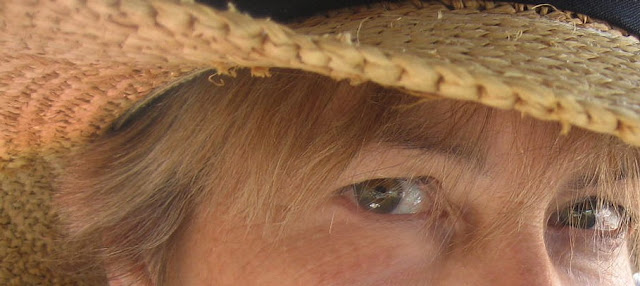
Vanity of Age: My Eyes Are Naked


Eyes of Duran. New Mexico. July 2017. Credit: Mzuriana.
Eyes of Duran. New Mexico. July 2017. Credit: Mzuriana


I've never been one to wear a lot of make-up, but once I became a woman of a certain age, I religiously applied lipstick and an eyeliner pencil. And more recently, mascara. Every day. 

But now I've been diagnosed with blepharitis (and dry eye). 

So, I've been going out and about with naked eyes. 

I don't like this one bit. 

Lack of eye definition makes me look faded. Looking faded is looking older, more tired, more washed out, less alert, less crisp.  

Part of the issue, I'm coming to realize, is the thinning of my eyelash forest. 

Have I lost eyelashes? If yes, is it due to a non-reversible aging process? Or is it a function of previously undiagnosed blepharitis? Or a COVID consequence? If either of the latter two, will the lashes grow back at some point? 

In the meantime, I'm on the search for some work-arounds. 


Monday, January 31, 2022

Eyes: In the Dark


Eyes in Tularosa, New Mexico. May 2013.


I read this passage in Elderhood by Louise Aronson: 

"A sixty-five year old eye admits only one-third the amount of light as a twenty-year old eye .... "

Page 355

What the what?! 

Why was this the first I learned about this!? 

I've needed vision correction since I was in the 4th grade and I've never had an ophthalmologist or optometrist mention this to me. 

So I got to thinking. How does that affect us (you know, the "us" who are 65+) when we drive at night? 

I saw some stupidly simple things to do that can help

7 Tips for Seeing Clearly While Driving at Night

  1. Clean your windows and mirrors. Historically, I've done a haphazard job of this. And I have paid the price in reduced vision because of the glare on a grimy windshield at night or at sunrise or sunset when the sun stares right into my eyes. 
  2. Dim your dashboard. Never thought of this. 
  3. Use the night setting on your rearview mirror. I typically only do this if the person behind me has their brights on. I'll try to get in the habit of routinely doing so. 
  4. Don't look directly at oncoming headlights. OK, that I already practice. 
  5. Decrease your speed
  6. Skip the yellow-tinted glasses. Evidently, they don't work. Instead, wear glasses with a non-reflective coating. I don't think I had heard of these before. 
  7. Schedule an annual eye exam. This would seem to be a no-brainer, right? But incredibly,  after my early-onset cataract surgery (wow! cataracts gone! severe nearsightedness gone! astigmatism gone!), I somehow let almost 10 years go by without an eye exam before I got annoyed enough with a vision change that I went in for one. But in the three years since, I've been diligent. 


A 2007 New York Times article by Jane Brody, Growing Older, and Adjusting to the Dark, served up good thought food, as well. Some excerpts: 

The human eye changes gradually with age, but the changes are critical, as the Harvard Health Letter described in its March 2006 issue.

In dim light or darkness, eyes adapt by widening the pupils to let in as much light as possible. The iris (the colored part of the eye surrounding the pupil) contains tiny muscles that control the size of the pupil. As you get older, these muscles (like most in the body) weaken and do not respond as well to the need to let in more light. The result is a small pupil when you try to see in poor light. It’s as if your eyes were still young but you were wearing sunglasses at night.

There is also evidence that as we age we lose more rods than cones. In the young eye, rods outnumber cones by nine to one in the part of the retina called the macula. But an autopsy study of older adults found that while the cones remained intact, almost a third of the rods in the macula had been lost.

The less responsive muscles in the iris also affect the eye’s ability to adjust when the intensity of light changes, such as when a car with its headlights on approaches and then passes.

Brody also had a list of darktime hacks. Most were the same as the list above, with some surprising new ones: 

  1. Wear sunglasses during the day, before driving at night: "The No. 1 recommendation [from AAA] is to protect your eyes during the day by wearing sunglasses (neutral-gray lenses are best) and a hat with a brim when the sun is shining. Bright sunlight bleaches the photoreceptors and lengthens the time it takes for your eyes to adjust to the dark. While it normally takes half an hour for full adaptation to the dark, being in bright sunlight for two or three hours can delay this adaptation by hours.'The longer you stay in the sun, the worse your night vision gets,' [AAA warned.][Emphasis added.] 
  2. "If you wear glasses, make sure they are clean. Grimy glasses, like a grimy windshield, scatter light. .... Though I don’t legally need glasses to drive, my ophthalmologist suggested I wear them, especially when driving at night, to enhance my distance vision."

And with this I concur wholeheartedly, based on my personal experience: 

"If you have cataracts, have them removed sooner rather than later, and see how much brighter the world can be."

My mother had her cataracts removed when she was close to 90. I had mine removed when I was in my 50s. Doing so changed my life. I had almost arrived at the point where I couldn't safely drive at night unless it was on a familiar route close to home. Otherwise, the lights of oncoming traffic blinded me so much I couldn't discern lane markings or the shoulder edges.  


References

Lighting Research Center: Lighting the Way: A Key to Independence: Lighting for Older Adults: The Aging Eye

From Human Factors and Aging:Identifying and Compensatingfor Age-related Deficits in Sensory and Cognitive Function, by Frank Schieber (2002):

"The maximum diameter of the pupil declines with advancing adult age (a condition known as senile miosis). Under low light conditions, the resting diameter of the pupil falls from 7 mm at age 20 to approximately 4 mm at 80 years of age (Lowenfeld, 1979).

"[But note this:] Although senile miosis reduces the amount of light reaching the retina, there is reason to suspect that smaller pupil diameters may actually benefit visual performance in older adults in many situations by increasing the contrast of the retinal image (see Sloane, Owlsey & Alvarez, 1988)."