Monday, May 23, 2022

Eyes: Eyelid Hygiene: Who Knew?

Yellow eye, artist unknown. Missouri. February 2006. Photo credit: Mzuriana.

The 3 take-aways from this post

  1. The older we get, the more likely we are to acquire blepharitis and dry eye.
  2. Good eyelid hygiene prevents or helps manage blepharitis and dry eye. 
  3. We should cleanse our eyelids at least once per day whether we need to or not.

 
Until this year, I never thought about eyelid hygiene. I washed my face. Showered. Wore eyeliner and mascara

But apparently, the careful cleaning of our eyelids is a thing we should do. When I say eyelids, I mean along the lash lines. When I say careful, I mean not a slapdash, close-enough-for-horseshoes swipe with a soapy washcloth across the lids, but mindful back-and-forth strokes. Not too soft and not too hard. Assertive. Not aggressive.

I did not know about eyelid hygiene until after an ophthalmologist diagnosed me with blepharitis and dry eye in April. 

He handed me two pieces of paper as I left his exam room, accompanied by a meager crumb or two of explanation: 

1.    A list of products from one brand's line of: 

  • Tea tree oil eyelid wipes to cleanse my eyelids
  • Microwaveable heat compress mask
  • Preservative-free lubricating drops
  • Night time ointment

2.   A prescription for Restasis (which would have cost me $500 for a one-month supply out-of-pocket if I had filled it)

This post addresses the eyelid cleaning only. 

I watched a score of youtube videos by eye doctors, and I read a ream of online articles and subreddit posts on the subject. With the exception of the feral, entirely anecdotal subreddit, I used written sources that I felt were most reliable, such as the high-reputation Mayo Clinic and Cleveland Clinic. 

What do we use to clean our eyelids? 

There is a lot of chatter out there about these cleansing products:

  • Wipes (and the pros and cons of tea tree oil formulations)
  • Foam scrubs
  • Diluted baby shampoo
  • Dandruff shampoo
  • Cleansing sprays

This is not a medical blog and I'm not an expert, so I'll wish you well on your personal quest for the perfect product and technique.

But below is my personal journey, which is in its early days still. 

What I chose 

I bought two eyelid cleansers: 

  1. Tea tree oil wipes - because I didn't know yet if I had an overpopulation of demodex (mites) or not - and tea tree oil formulations seemed to be the go-to for subduing the mite population; and
  2. OcuSoft Lid Scrub Plus - because I could use my finger to apply it and it was more cost-effective than the packaging-heavy and very expensive wipes

At first, I also bought a travel-size bottle of baby shampoo and diluted it, but my subsequent research pointed to newish concerns about this, so I've suspended its use as an eyelid cleanser for now. 

What I will choose next 

I've had a follow-up visit since my first diagnosis and I now know that I do not have an overpopulation of demodex (mites). I do have scurf and scales, which translates to dandruff flakes in my lashes and along the lash line. 

Therefore, I will not buy the tea tree oil wipes again. Too expensive. Too much packaging.

I will buy the OcuSoft Lid Scrub Plus Platinum next time (instead of "just" the Plus). In addition to the qualities in the Plus product, it also reduces inflammation.


Why I care about pushing my blepharitis into remission

I'm very, very lucky. My blepharitis is not at a stage where it causes a fiery swelling of my lids, redness of my eyeballs, or pain. I had no idea I even had this blepharitis thing. 

However. What I have experienced is intermittent blurriness in my vision. Blepharitis (and dry eye) often does this. And that matters to me, a lot. 

Also, blepharitis can lead to or exacerbate dry eye. Dry eye is another suspect in intermittent blurriness. 

As we age, compromised vision - especially at night - can affect our ability to drive safely. Being able to drive safely as long as possible is a major quality-of-life indicator. 

So I'm gonna clean my eyelids. 

Thursday, May 19, 2022

Out Damned Spots!


Purpura on arms. Source: American Osteopathic College of Dermatology. Photo credit:  Jere Mammino, OD.
Purpura on arms. Source: American Osteopathic College of Dermatology. Photo credit:  Jere Mammino, OD.


"Out, damned spot! out, I say!"

Lady Macbeth


From No Sweat Shakespeare, is this reference about the famous quote from Macbeth: 

As [Lady Macbeth] walks she rubs her hands as though washing them, trying to get rid of the blood. The spot she’s referring to is a spot of blood on her hand. She’s rubbing it, trying to erase it, but cannot. “Here’s yet a spot,” she cries, desperately rubbing. “Here’s the smell of blood still.


So as we age, some of us find, in addition to other dermal indignities, that blood spots inexplicably appear, then disappear, then appear, on our arms. 

In addition to wrinkles, these small lesions are blaring horns of aging. No, not just aging, but of agedness completed. Of OLD PEOPLE. And we are not an Old Person yet. We cannot be! Are we? Are we? 

To add insult to injury, a common name for these lesions is senile purpura, although there are more neutral names available: 'actinic purpura', 'solar purpura' or 'Bateman's purpura.'


I can't go back in time and do a better job of protecting my arms from sun damage, but I can do a better job of protecting it from additional damage with:

  1. Sunscreen (instead of just on my face)
  2. Long-sleeved tops
  3. Sun sleeves

I didn't know sun sleeves were a thing until I saw a friend wear them for his walks in the desert. 

These damned spots piss me off. 


Monday, May 16, 2022

Vanity of Age: You Look Like Sisters!


Mural, Segundo Barrio, El Paso, Texas. November 2016. Photo credit: Mzuriana.
Mural, Segundo Barrio, El Paso, Texas. November 2016. Artist credit: Los Dos, Ramon and Christian Cardenas. Photo credit: Mzuriana.


My mother was 25 years older than I. 

There was a year, when she was in her late 70s, and I in the first nickel of my 50s, that she and I took some travel excursions together. Several times in that year, people - strangers - upon learning we were mother and daughter, exclaimed, "You look like sisters!" 

My mother, of course, was quite pleased. 

I was not as tickled. 

Was it because my mother looked so youthful? Or was it that I looked older? 

In Kansas City, I asked this of the sales person who made such an exclamation. She merely side-cocked her head, raised her eyebrows, and lifted her shoulders in a Gallic shrug. My comeuppance.

A puzzle never solved. 

I admit: It rankled. It also made me laugh; it still does. 


Thursday, May 12, 2022

Accessible Communities for the Third Age


Toronto Islands boardwalk. June 2016. Credit: Mzuriana.


In my perfect world, in four years +/- two, I will settle down in a city with these characteristics:

  1. Population size: 300k to 750k
  2. Demographics: Diverse in age, complexion, ethnicity, language of origin, and socio-economic status
  3. University campus (for its cultural events open to the community)
  4. Mild climate
  5. Historical interest
  6. Library system
  7. Diverse and well-dispersed food markets and parks
  8. Widespread, universal design for pedestrians, wheelchair/walker/stroller users, cyclists, and alternative-motorized vehicles, such as golf carts


#8 is very important for me. I envision a time in which I'll need to retire my car keys. When that happens, I'll want to be living in a walkable community. An accessible community. 


What is an accessible community? 

Here's how Canadian Rick Hansen (a wheelchair user) defines it (emphases mine): 

An accessible community is barrier-free and doesn’t limit anyone’s participation in everyday life.

In accessible communities, people with disabilities can be active participants. Ensuring that such communities exist — and thrive — is important because both people with disabilities and their neighbors benefit. Accessible communities:
  • Allow for the interaction and engagement of all members,
  • Reduce social isolation and improve mental health for people with disabilities,
  • Increase economic gains for local businesses, and
  • Improve physical health opportunities and outcomes for all.
Mr. Hansen's definition above focuses on people with disabilities, but the beauty of accessible communities is that it benefits all of us, including, for example, caregivers of children in strollers and folks who may not have a disability in the strictest sense of the word, but who, for example:
  • Move more slowly or carefully than more able-bodied people
  • Have limited stamina to walk far without frequent rests at well-spaced benches

Tied in my mind to accessible communities are: 
  • The broader concept of universal design
  • Walkability, i.e. curb cuts, sidewalks, traffic calming, cyclist lanes, etc.
  • Robust, affordable public transportation system that can include buses or vans, Uber/Lyft, or in the not-too-distant future, driverless cars that one can "call up" for errand-running
  • Pathway design for alternative personal vehicles such as golf carts, bicycles and adult tricycles, and motor scooters
  • Avoidance of food deserts
  • Good street lighting (that also conforms with Dark Skies)
  • Green spaces equally dispersed throughout the community


Good lighting versus bad lighting. Source: FAU Astronomical Observatory.
Good lighting versus bad lighting. Source: FAU Astronomical Observatory


AARP's website has a section devoted to "AARP livable communities" and "age-friendly communities." It has a lot of depth to it, including free guides for individuals and community leaders. 


Monday, May 9, 2022

A Woman of Age for Reproductive Rights


Women's March in El Paso. January 2017. Credit: Mzuriana.


I am unabashedly, unreservedly, enthusiastically pro-choice. 

Being pro-choice means I support a woman's right to choose how she responds to an unwanted pregnancy:

  • Not be pregnant → choose abortion
  • Not parent → choose to make an adoption plan
  • Parent

A woman does not need to justify, argue, defend or explain her decision to me. 


Why is this relevant to being a woman of age? 

Because people who vote skew older, it is incumbent upon voters who live in the Land of Age to protect the rights of women younger than we are. 

These recent assaults against abortion access are assaults on women's rights of self-determination, civil rights, and human rights. 

We need to protect the rights:

  • We once had, when we were of child-bearing age. 
  • Our daughters once had during their most vulnerable years of unwanted impregnation. 
  • Of our granddaughters. 


Declaration of Independence

The Declaration of Independence, which the Constitution incorporates, states that all humans have three intrinsic rights: Life, liberty, and the pursuit of happiness. 

About that right to life? That's my right to life. Your right to life. 

My right to life and your right to life subordinate that of a potential life in a uterus. The potential life in a uterus does not have more legitimacy than mine or yours. 


Adoption is not an alternative to abortion

Supreme Court Judge Amy Comey Barrent has allegedly stated that adoption is a viable alternative to abortion, therefore abortion is unnecessary. I get why she and many other folks think this way. 

But it is inaccurate reasoning. 

Adoption is an alternative to parenting

Abortion is an alternative to pregnancy

Furthermore, as someone who worked with a pro-choice private adoption agency, I can tell you that women who make adoption plans receive strong-arm pressure from family and friends to change their minds. This is what they hear:

  • "How can you give away your flesh and blood?!
  • "You will regret this!"
  • "How can you give away my grandchild?!
  • "Your child will hate you!"
  • "I'll help you raise your baby!" Note: Although said with the best of intentions, the help has a shelf life of about three months post-delivery. 

Adoptive parents tend to both vilify and feel grateful to the birth parents who chose them to parent their infants. 


There are pro-choice Republicans, but the Republican Party has been hijacked by fundamentalists

From this wikipedia entry on the now-defunct Republican Majority for Choice organization: "In 2017, Gallup released polling information showing that 36% of Republicans identified as "pro-choice" and 70% agreed that abortion should be legal in some (56%) or all (14%) circumstances."

Pro-choice Republicans have gone underground, forfeiting the field completely to a minority, fundamentalist core. Our current situation is the culmination of decades of the Three Bs messaging espoused by effective fundamentalist strategists: Babies, Bullets, and the Bible. 


Venerable organizations that advocate for women's reproductive rights

Remember them? 

  1. NARAL, founded circa 1970, by Bernard Nathanson, Betty Friedan (author of Fountain of Age), and Ernesta Drinker Ballard.
  2. NOW, founded in 1966 by Betty Friedan, Shirley Chisholm, Pauli Murray, and Muriel Fox.
  3. Planned Parenthood, with roots going back to 1916, by Margaret Sanger, Ethel Byrne, and Fania Mindel.
  4. Women's Political Caucus, founded in 1971, a multi-partisan organization with national, state, and local affiliations, by Bella Abzug, Shirley Chisholm, Betty Friedan, Fannie Lou Hamer, Mildred Jeffrey, Jill Ruckelshaus, and Gloria Steinem. Mission statement: NWPC is a national, pro-choice, multi-partisan, grassroots membership organization dedicated to identifying, recruiting, training and supporting women candidates for elected and appointed office.
  5. ACLU (American Civil Liberties Union)
  6. Religious Coalition for Reproductive Choice, with the motto: Pro Faith, Pro Family, Pro Choice


For those of us in the Land of Age: We dropped the ball. We became complacent. 

We allowed the proverbial camel's nose to get under the tent. And the tent is about to blow away if we don't catch it. 


Thursday, May 5, 2022

My Inspirations: Peace Corps Volunteers of Age


Adelita to the rescue. Juarez, Chihuahua, Mexico. Source: Museum of the Mexican Revolution. February 2017.

Youthful fancies

Since adolescence, one of my dreams has been to serve in the Peace Corps (or similar). When I was young, it combined all of my fairy-tale fantasies (not kidding):

To be a princess-heroine who travels the world incognito, overcomes tremendous challenges, saves tragic souls in dire circumstances, and who reaps acclaim for her bravery, good deeds, and wisdom. And a prince.

Indeed, in my youth, my fantastical mindset probably epitomized the cliché of a white savior, except for the white part, as my hubris was not focused on the unsolicited salvation of people with a particular complexion or geographic origin. I rescued my exclusively white suburban classmates numerous times from kidnap (a favorite theme) in my imagination. In that fantasy world, I also traveled back in time, where-when I drew upon my modern-day knowledge of stuff to save the day for imaginary damsels and swains in distress. 


Now being older

Eventually, I right-sized my fantasies of heroic derrings-do, but the dream of serving in the Peace Corps or something similar, remains. 


Role models for me to consider

  1. The first was President Jimmy Carter's mother, Lillian Carter, who joined the Peace Corps when she was 68. Learning this back in the 70s planted a seed: That the Peace Corps welcomes older volunteers.
  2. Peace Corps page for prospective volunteers over 50: Volunteering and Retirement
  3. In Blue Ridge Now: Joining the Peace Corps After 60
  4. A series on Not Exactly Retired: Older Peace Corps Volunteers
  5. From a 2016 NPR piece on an 87 year-old volunteer: Peace Corps Volunteer Values Staying Active in Old Age


Monday, May 2, 2022

Body: This Inflammation Business


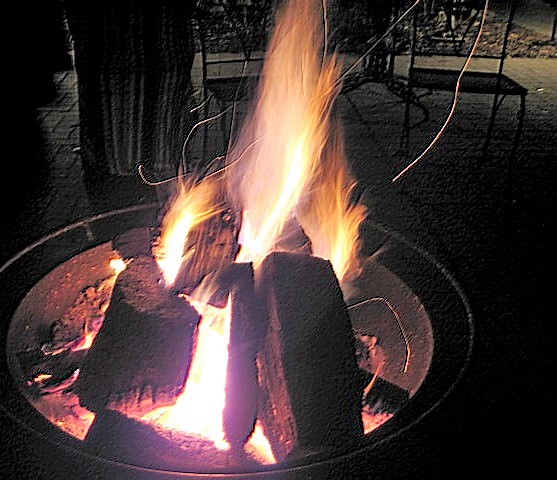
Fire pit. December 2010. Credit: Mzuriana.


My old, narrow mental model of inflammation

Historically, when I have seen the word inflammation, I have thought swelling., and depending on the source and location of the inflammation on the body, a swelling accompanied by reddened skin. Inflamed skin. Inflammatory speeches that incite violent reactions from the audience. On fire. Engulfed in flames.


My biases 

Bias #1: By nature, my brain goes oppositional when I start to see specific terms crop up frequently in our societal conversations. The influx of the term "anti-inflammatory" in recent years - sans any definition of same - earned my skepticism as a woo-woo catchall designed to promote the nutrition supplement industry, mass-market nutrition gurus, authors of best-selling diet books, and the like. 

In this context, my skepticism applied to the term anti-inflammatory as a mysterious and Very Bad Systemic Thing, and not to the concrete definition of inflammation I cited at the start. 

Bias #2: I view much of what's out there re: nutrition, supplements, food behaviors, et al as noise that may or may not have the empirical research to back it up. I look toward reliable sources of information, such as the Mayo Clinic, Cleveland Clinic, Johns Hopkins, or Harvard Medical websites. 

Bias #3: Even healthcare professionals, specifically doctors, physician assistants, and nurse practitioners - all highly educated, respected by me, and skilled - are vulnerable to trends. They're also susceptible to easy answers: It's a part of normal aging. Drink water. Exercise. Stop smoking. Lose weight. 

Bias #4: If we (professionals and patients alike) see a statistic or statement cited often enough, we tend to ascribe truth to it, without investigating the source or accuracy of the belief. A good example relates to how much water we should drink every day. I remember one widely-popular claim that averred: "If you are thirsty, it means you are already dehydrated." I'm willing to bet that the originator of that meme just pulled that out of her ass because it sounded good. 

Bias #5: Not all doctors are reliable sources of information. Dr. Oz, for one


So ... what is inflammation (systemic)? 

I like the University of Chicago's School of Medicine's  definition of inflammation. It is simple and clear:  

What is inflammation?

Inflammation is the body’s response to a problem. It’s a normal, important reaction that signals to the immune system that something is wrong, so it can then fight off infection or heal injuries. When you have influenza and run a fever, that’s inflammation. When you eat something bad and get diarrhea, that’s inflammation. Swelling after you twist your ankle? That’s inflammation, too. We need a little inflammation. We would die if we did not have inflammation.

Chronic inflammation, however, is another story. Chronic inflammation can damage healthy cells, tissues and organs. Over time, it can lead to diseases like diabetes, rheumatoid arthritis and heart disease.


When I read the above, and similar, definitions of inflammation, a light bulb flashed on. Nay, a floodlight. 

Ohhhh, I realized. This is very much like the physical manifestations of burnout! Where our body's stress reaction (fight or flight) doesn't stand down. Instead, it remains on high alert. Which means that the chemical soldiers that our bodies deploy for our stress response never return to their barracks to sleep, never go on R&R. 

In one of my past lives, I was a professional development trainer. To prepare for workshops on stress management and burnout, I had learned that when our bodies (including our brains) do not stand down from stress, a protracted stress response state most assuredly brings physical consequences. 

Of course our bodily soldiers cannot remain on high alert 24/7 without consequences. 

So I think I get it now. The whole thing about anti-inflammatory foods, supplements, exercise, etc. 

From Smithsonian, here's a list of how our minds and bodies respond to an acute stressor, readying us for fight or flight: 

  1. ... the nervous system instructs our bodies to release stress hormones including adrenaline, noradrenaline and cortisol. These produce physiological changes to help us cope with the threat or danger we see to be upon us. This is called the “stress response” or the “fight-or-flight” response.
  2. ... the respiratory system is immediately affected. We tend to breathe harder and more quickly in an effort to quickly distribute oxygen-rich blood around our body. ... 
  3. ... Cortisol released in our bodies suppresses the immune system and inflammatory pathways, and we become more susceptible to infections and chronic inflammatory conditions. Our ability to fight off illness is reduced.
  4. ... Our muscles tense up, which is the body’s natural way of protecting ourselves from injury and pain. Repeated muscle tension can cause bodily aches and pains, and when it occurs in the shoulders, neck and head it may result in tension headaches and migraines.
  5. When stress is acute (in the moment), heart rate and blood pressure increase, but they return to normal once the acute stress has passed. If acute stress is repeatedly experienced, or if stress becomes chronic (over a long period of time) it can cause damage to blood vessels and arteries. This increases the risk for hypertension, heart attack or stroke.
  6. The endocrine system also suffers. This system plays an important role in regulating mood, growth and development, tissue function, metabolism and reproductive processes. Our metabolism is affected. The hypothalamus is located in the brain and it plays a key role in connecting the endocrine system with the nervous system. Stress signals coming from the hypothalamus trigger the release of stress hormones cortisol and epinephrine, and then blood sugar (glucose) is produced by the liver to provide you with energy to deal with the stressful situation. Most people reabsorb the extra blood sugar when the stress subsides, but for some people there is an increased risk of diabetes.
  7. ... We might experience heartburn and acid reflux especially if we have changed our eating habits to eat more or less, or increased our consumption of fatty and sugary foods. The ability of our intestines to absorb nutrients from our food may be reduced. We may experience stomach pain, bloating and nausea, diarrhoea or constipation.


But. 

What is missing from almost all of the anti-inflammation stuff out there is how meditation and active stress management is likely necessary. Eating more oatmeal ain't going to be enough. 

And this leads me back to some old friends: 

  • Dr. Dean Ornish
  • Aldous Huxley's The Island
  • Stephen Covey's Circle of Influence and Circle of Concern
  • Victor Frankl's Man's Search for Meaning


Why Dr. Dean Ornish? Because he did not just follow a medical model of prevention and treatment for cardiovascular health. He integrated two non-medical components to his prescription: 

  1. Stress management
  2. Sustaining close, loving relationships with others, whether they be friends, family members, or both

Why Aldous Huxley's The Island? Because in this utopian novel, the practice of meditation and mindfulness ("here and now boys, here and now") were intrinsic to his utopian model of a healthy culture. 

Why Stephen Covey's Circle of Influence and Circle of Concern? Because the distinction between the two circles keeps us in our own lanes. We have power over things we can control (influence), such as how we choose to respond to others' behaviors. If we try to manipulate, manage, or worry about things and people over which we care about, but over which we have no control, then not only do we divert ourselves from effectiveness in our own lives, we may actually do harm to our relationships or to others, in general. Furthermore, the stress we feel when trying to manage or manipulate what others do or believe hurts us.

Why Viktor Frankl's Search for Meaning? Because he concluded, in his experience of the Holocaust, that we can't control all that happens to us, but we do have control over how we respond. We decide the meaning we place on what happens on us. 


Yeah, yeah, and so what? How does this relate to me as I travel in age?  

Well, now the inflammation thing makes sense to me. I'm now willing to take it seriously as a Real Thing that has gravitas; something I need to attend to. 

I want to stay in the Third Age as long as possible, before walking the inevitable trail to the Fourth Age. 

So for me, this new understanding translates into these actions: 

  1. Be more prescriptive about what I eat. Choose foods that I enjoy and that seem to possess anti-inflammatory and anti-oxidant properties. 
  2. Keep up the brisk walking discipline, not only most days, but for longer distances. 
  3. Meditate. 
  4. Gather and use tools to best manage stress. Practice mindfulness. 
  5. Continue to build and sustain a close circle of hearts (family members and friends of diverse ages, backgrounds, and perspectives) that I give to and receive from. ' 
  6. Embrace more real-life skill acquisition and problem-solving (I suspect these are more effective at maintaining or growing brain stuff than doing puzzles or word games.)


Dwan Light Sanctuary. Montezuma, New Mexico. August 2013. Credit: Mzuriana.
Dwan Light Sanctuary. Montezuma, New Mexico. August 2013. Credit: Mzuriana